Haider Rasool, Barrister · 21 November 2026
Few messages cause more panic than the one telling a Skilled Worker that their employer is no longer a licensed sponsor. The Home Office has revoked thousands of licences in the past year, and each revocation leaves workers who did nothing wrong asking the same questions. These are the answers, as the rules and Home Office guidance stand today.
Sponsor licence revoked: what happens next?
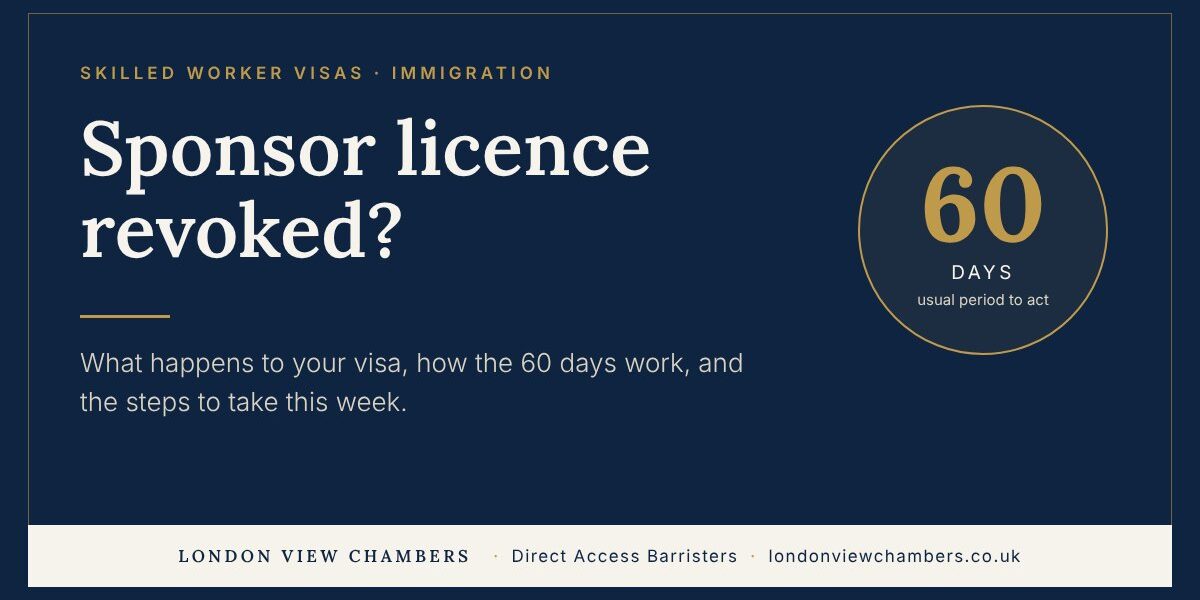
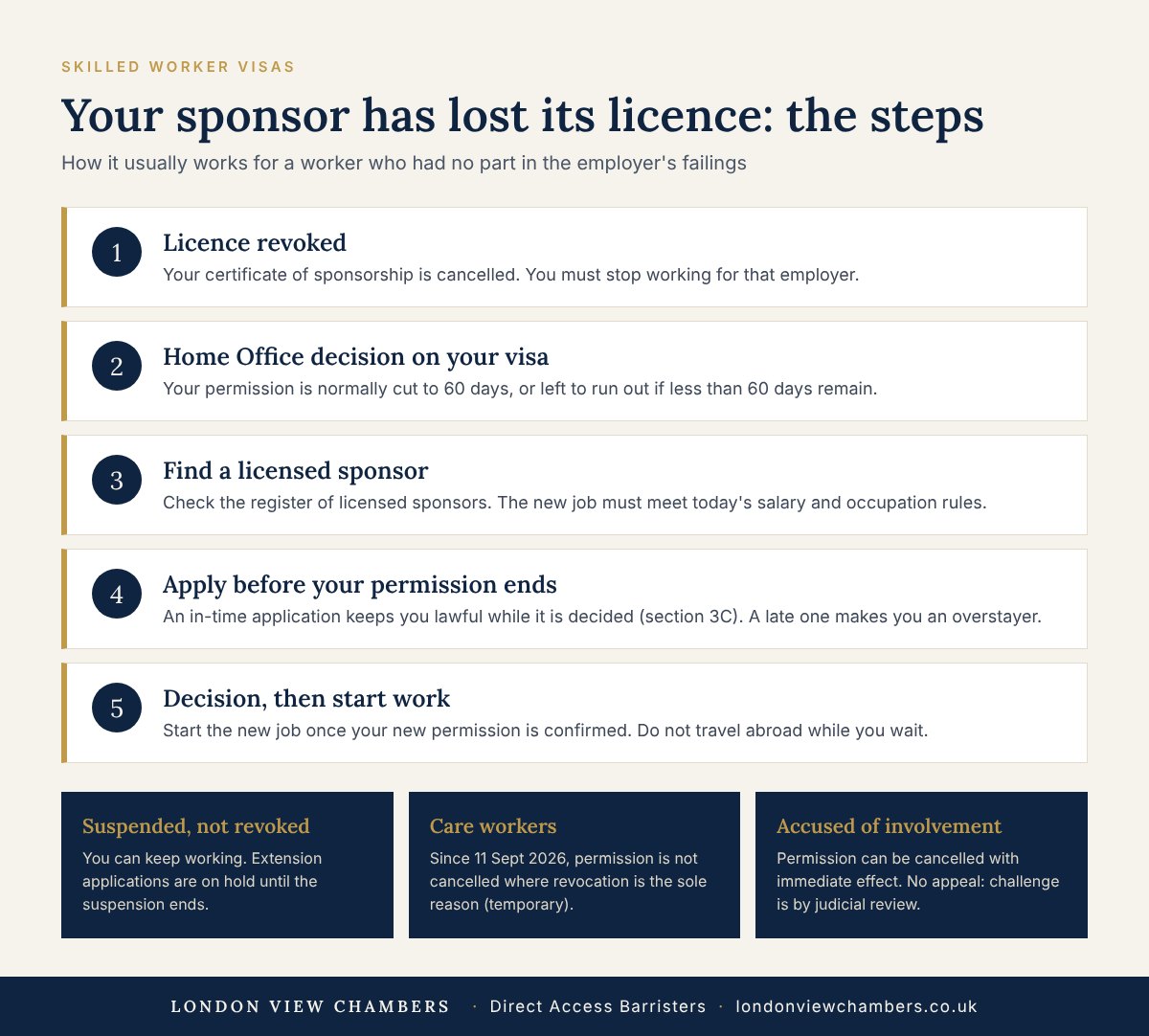
Two things happen. Your certificate of sponsorship is cancelled, and the Home Office will look at shortening your visa. GOV.UK puts it simply: your visa is “limited to 60 days (or however long you have left on the visa if it’s less than 60 days)”.
The legal power is paragraph SUI 34.1 of the Immigration Rules, which says a worker may have their permission cancelled if “their sponsor does not have a sponsor licence”. Notice the word “may”. Cancellation is a separate decision about you, made by a caseworker, and the Home Office’s own guidance tells caseworkers not to cancel automatically where there are reasons it may not be appropriate.
Skilled Worker visa curtailment period: do I really get 60 days?
For most workers, yes. Where you had nothing to do with the reasons your employer lost its licence, the guidance says it will normally be appropriate to leave you with 60 days. If your visa has less than 60 days left, it simply runs to its original end date. A longer period is reserved for exceptional compassionate cases, such as serious illness or late pregnancy.
The 60 days run from the decision on your own visa, not from the day your employer lost its licence. There can be a gap of days or weeks between the two, so do not wait for the letter before you start looking.
The position is very different if the Home Office believes you were involved. GOV.UK warns that if you are “involved in the reasons why your sponsor lost their licence”, your visa will be withdrawn and you will have to leave the UK immediately. Think of a worker who knew the job did not really exist, or who paid back part of their salary to the employer. If that allegation is made against you and it is untrue, it needs to be answered.
The Government announced in the Budget that the highest-skilled workers may get up to six months to find a new sponsor from 2027. That is an announcement, not law, and nothing has yet been laid before Parliament.
Can I keep working after my sponsor licence is revoked?
No. GOV.UK says you will “have to leave your job and leave the UK unless you make a new visa application” within the period. Your employer can no longer sponsor you, so the sponsored job ends with the licence.
Sponsor licence suspended: is that the same thing?
No, and the difference matters. Suspension means the Home Office has paused the licence while it investigates. If you are already working, you can keep working. Any application to extend your visa will be put on hold until the suspension ends. A suspension can end with the licence restored or revoked, so treat it as a warning. If your sponsor has been suspended, that is the moment to update your CV and start talking to other licensed employers.
How do I find a new sponsor within 60 days?
You need an employer that holds a sponsor licence and will assign you a new certificate of sponsorship. The register of licensed sponsors on GOV.UK lists every licensed employer, and it is the quickest way to check that a prospective employer can actually sponsor you. The new job must meet the Skilled Worker salary and occupation rules in force on the date you apply, which may not be the rules that applied when you first came.
Then apply to update your visa before your shortened permission runs out. This is the single most important point in this article. If you apply in time, section 3C of the Immigration Act 1971 extends your permission while the application is decided, so you stay lawfully in the UK even after the 60 days have passed. If you apply one day late, you are an overstayer. GOV.UK says you should not start the new job until your new permission is confirmed, and you must not travel abroad until you have a decision.
If no sponsored job appears, look at other routes before the deadline: a partner visa if your partner is British or settled, a dependant visa through your partner’s own work visa, or Global Talent if you qualify. If nothing fits, leaving before your visa ends protects your record for any future application.
I am a care worker. Is it different?
Yes. Since 11 September 2026, Home Office guidance has told caseworkers not to cancel the permission of care workers and senior care workers (occupation codes 6135, 6136, 6145 and 6146) where the only reason would be the revocation of their sponsor’s licence. The arrangement is described as temporary and subject to regular review, and it does not help where there is any other reason to cancel. The Government has also announced that from 1 February 2027 care workers will have up to 120 days to secure a new job offer, plus 60 days to resolve their status. I have written separately about care worker ILR and the new rules.
Can I appeal a curtailment letter?
There is no right of appeal or administrative review against a cancellation decision. The guidance says so in terms. A decision that is unlawful, for example one that wrongly finds you were complicit, ignores compelling circumstances, or gives no proper reasons, is challenged by judicial review. Judicial review must be brought promptly and in any event within three months. For most people a fresh application within the 60 days is the better course, but a wrongful finding of complicity can follow you into every future application, so it should not be left unanswered.
Does my time still count towards ILR?
Time with one sponsor and time with the next both count towards settlement, as long as you move with no gap in your permission. That is another reason to apply in time. The qualifying periods are changing under earned settlement, and the Government has made clear that breaches such as overstaying will count against applicants, so a clean and continuous record matters more than ever. My article on earned settlement and the new ILR rules explains the new periods.
What should I do this week?
- Check the register of licensed sponsors to confirm your employer’s status.
- Keep your contract, payslips, certificate of sponsorship details and any email from UK Visas and Immigration.
- Write down the date your visa now ends and work backwards from it.
- Contact licensed employers in your field now. A new certificate of sponsorship can take time.
- If you are told you were involved in your employer’s failings, get advice before you respond.
A final word
Losing a sponsor is frightening, but for most workers it is a problem with a deadline, not the end of their life in the UK. What matters is acting early and applying in time. If your employer has lost its licence, or you think it might, get in touch through our contact page. Any question, large or small, is welcome, and under Direct Access you can instruct a barrister directly, without going through a solicitor.
This article is general information, not legal advice.
Sources: GOV.UK, Employees: if your visa sponsor loses their licence; Home Office, Cancellation and curtailment of permission, version 12.0 (11 September 2026); Immigration Rules, Part Suitability, SUI 34.1; GOV.UK, Skilled Worker visa: update your visa if you change job.
Has your sponsor lost its licence?
Send a short message below and we will reply by email. Under Direct Access you can instruct a barrister directly, without a solicitor. An initial consultation by phone or video is a fixed fee of between £200 and £450, agreed with you before it takes place. See our fees.